
The Miami Grand Prix – is it a sporting or marketing event?
By: Ben Webb
The glitzy multi-billion dollar world of Formula One racing has undergone the biggest ever shake-up of its rules and regulations in a radical bid to boost its popularity. The result – surprisingly – is that the cars are now artificially slower. Max Verstappen, the four-time world champion, joked he now practices by playing Mario Kart.
But there is still more change in store. When the lights go out and the engines burst into life in Miami on Sunday, it’s time to expect the unexpected. That’s because, since the last race, all the stakeholders have gotten together and tweaked the rules again. The question they are asking: how can we create a product that is even more spectacular (and safe) so marketing teams can exploit it across a dynamic digisphere?
Not everyone is happy. The appeal of the sport since its launch in 1950 has been all about speed. Fans paid their money to see fearless drivers racing right on the limit of what man and machine can achieve together. Edgy, raw, dangerous…motor racing at its best.
Today, the engines are hybrids (petrol and electric) and drivers have to switch between the two. To get the best lap times, they have to harvest energy to charge their batteries, which means now and then they have to take their foot off the throttle even when they don’t want to. So the cars are not driven at full speed, but crucially, there is also more overtaking; the moments of high drama that can be shared across social platforms.
The logic? F1’s loyal fans–mostly male petrol heads who love the live roar of engines and the nuances of track layout, chassis design, gear ratios, driver stile–watch two hours of Grand Prix racing on Sunday afternoons. They are also getting older. The future is a new generation of younger fans, lovers of TikTok and YouTube, live streams, and touch points with the sport 365 days a year.
Premium sports and lifestyle brand
Liberty Global bought F1 in 2017 with a vision to create a premium sports and lifestyle brand. The so \-called paddock – the garages and communal areas where the teams gathered and prepared, and all the behind-the-scenes action happened – was out of bounds. Liberty wanted to change that, to lift the visor on the drivers and the sport itself.
So F1 is no longer about speed and tight-lipped drivers hidden away under their helmets. It’s a reality show meets soap opera starring glamorous drivers with a huge and colourful supporting cast of owners, engineers, and proteges. The Netflix series Drive to Survive introduced the sport – especially the drivers – to a huge array of new fans. So too did F1 The Movie, the Brad Pitt film, which grossed more than any other sports film in history.
And it’s working. Formula 1’s global fanbase reached 827 million in 2025, with a year-on-year increase of 12% and a 63% increase in 2018, according to formula1.com. The audience is younger, too: 43% of the fanbase is under 35 and 42% are female, compared to 37% in 2018, a growth of 43 million female fans year-on-year.
Social and partnerships
With all the changes to the rules and regulations, it’s no wonder fans–both old and new–have been left feeling a little confused. To help, Liberty has launched a comprehensive campaign called ‘All to drive for’, which includes a 60-second film starring all the drivers and F1 The Movie star Damson Idris, that is designed to “educate” and “excite”.
The focus of the campaign was social, with each platform performing a different role for the brand. YouTube is unsurprisingly better for longer-form content, which means it reaches the more old-school fans. In contrast, Instagram and TikTok are a good way to present a more light-hearted and less in-depth introduction to F1.
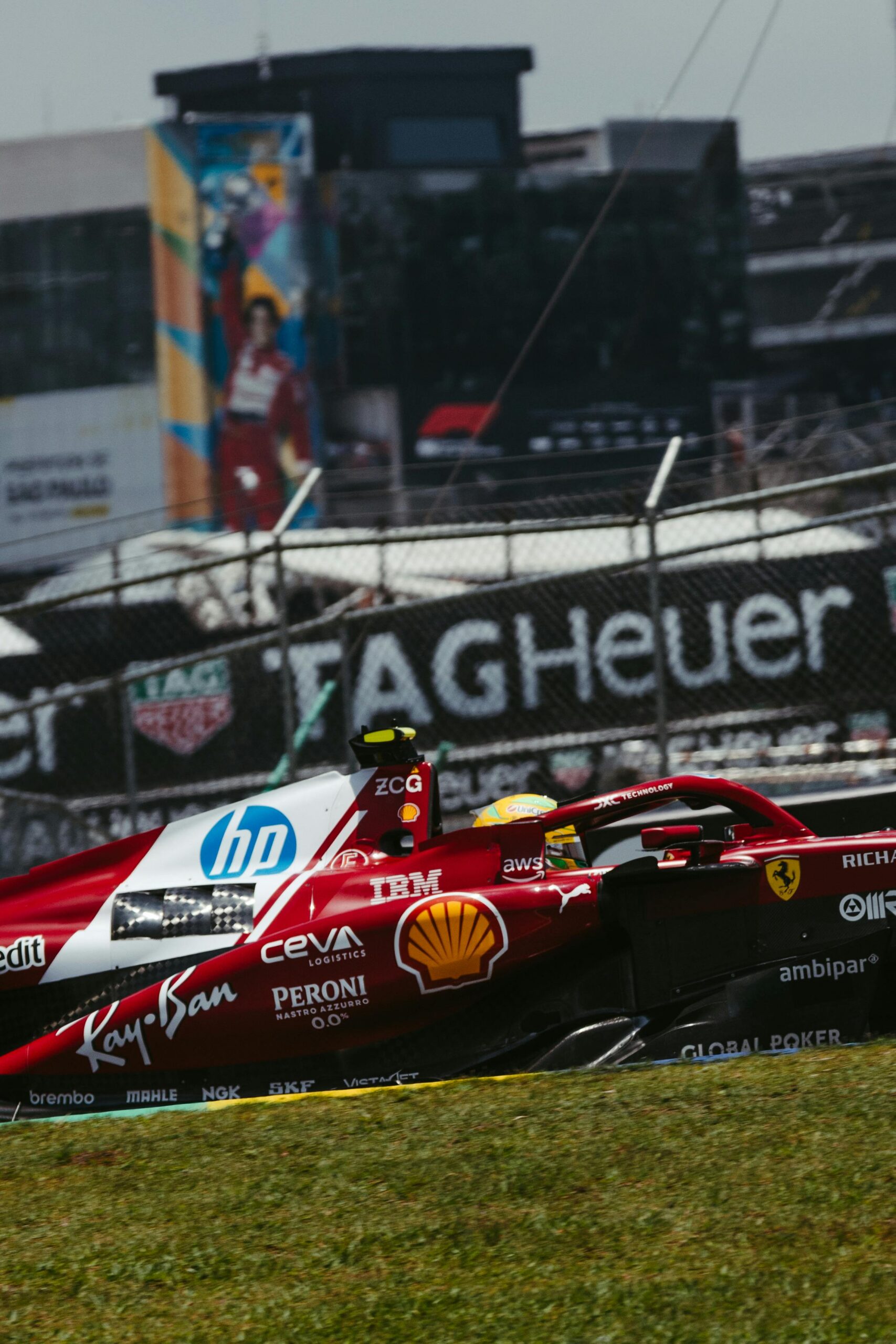
F1 is also leveraging its increasing number of lifestyle brand partners to spread the word that this global hi-tech show is far more than a weekly race for speed junkies. And it’s a very long list indeed, from global partners like AWS, LVMH, Pirelli, and Qatar Airways to many second rank official partners (Pepsico and American Express to Nestle) and its regional partners. There are new touch points with fans galore.
It’s a symbiotic win-win. F1 rapidly broadens its proposition and audience; lifestyle brands get a sprinkling of F1 high-tech glamor. On the fun side, KiKat has made a racing car out of chocolate. In contrast, LVMH will be expecting a hefty return on its $1.5 billion 10-year investment. It’s a lot to pay to be the official time keeper (TAG Heuer), carry case for the trophies (Louis Vuitton), and ubiquitous champagne supplier (Moët & Chandon).
The stakes are very high indeed. And that means if the rules have to be changed and changed again to attract a vast array of new fans–men and women, young and old–then so be it. Never mind if a few traditional fans are lost along the way, and it does start to look more like Mario Kart…